
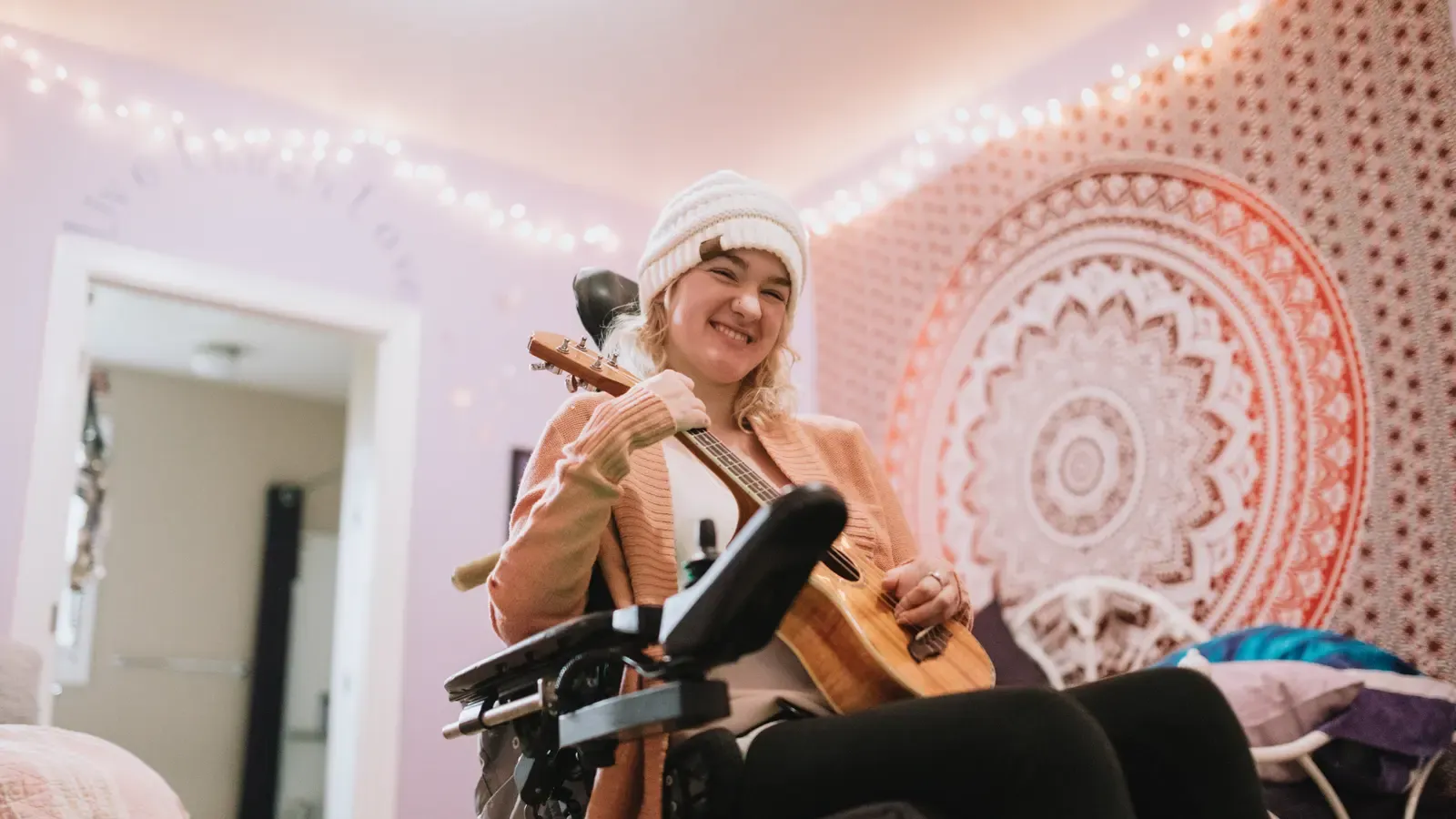
Progressive conditions need care that plans ahead
ALS, MS and muscular dystrophy do not hold still. What works this season will not be enough in the next one, and families often end up renegotiating help repeatedly, at exactly the moments they have least capacity to organize anything.
We would rather build for the direction of travel from the start — a schedule that can grow, and caregivers who stay long enough to know how someone likes to be moved.
Continuity is not a nicety here
With most services, a new caregiver means a short adjustment. With neuromuscular conditions it means someone who does not know the transfer technique, the communication system, the positions that ease pain and the ones that cause it.
That knowledge takes weeks to build and minutes to lose. Keeping the same people in place is the single most useful thing we do on this service.
What we cannot do
Anything clinical. Ventilators, tracheostomy care, suction and feeding tubes are skilled nursing and sit outside our license — usually delivered by a home health agency working alongside us. We handle the daily human work: washing, dressing, moving, eating, company, and the hours that let a family sleep.
Owner Kyana Wilkinson helped care for her father through ALS at fifteen. It is the reason this agency exists, and the reason this page is written plainly rather than gently.